Mathematics and Numeracy at Abercerdin Primary School

How we use White Rose Maths alongside Curriculum for Wales Principles
At Abercerdin Primary School, we want every child to feel confident, capable, and genuinely excited about maths. Our approach is built around the purpose and principles of Curriculum for Wales and is supported by the well-established White Rose Maths programme. Together, they help us give our learners a deep understanding of mathematical ideas through hands-on learning, exploration, and problem-solving.
Our Vision for Mathematics and Numeracy at Abercerdin Primary School
In our school, Mathematics and Numeracy is much more than numbers on a page. It's pattern-spotting, problem-solving, thinking logically, and making sense of the world around us. Our maths and numeracy curriculum helps our pupils become:
- Ambitious, capable learners who enjoy and welcome challenge.
- Enterprising, creative contributors who want to explore and experiment.
- Ethical, informed citizens who can work together respectfully.
- Healthy, confident individuals who believe "I can do maths!"
These are known nationally as the Four Purposes, and they guide everything we do.
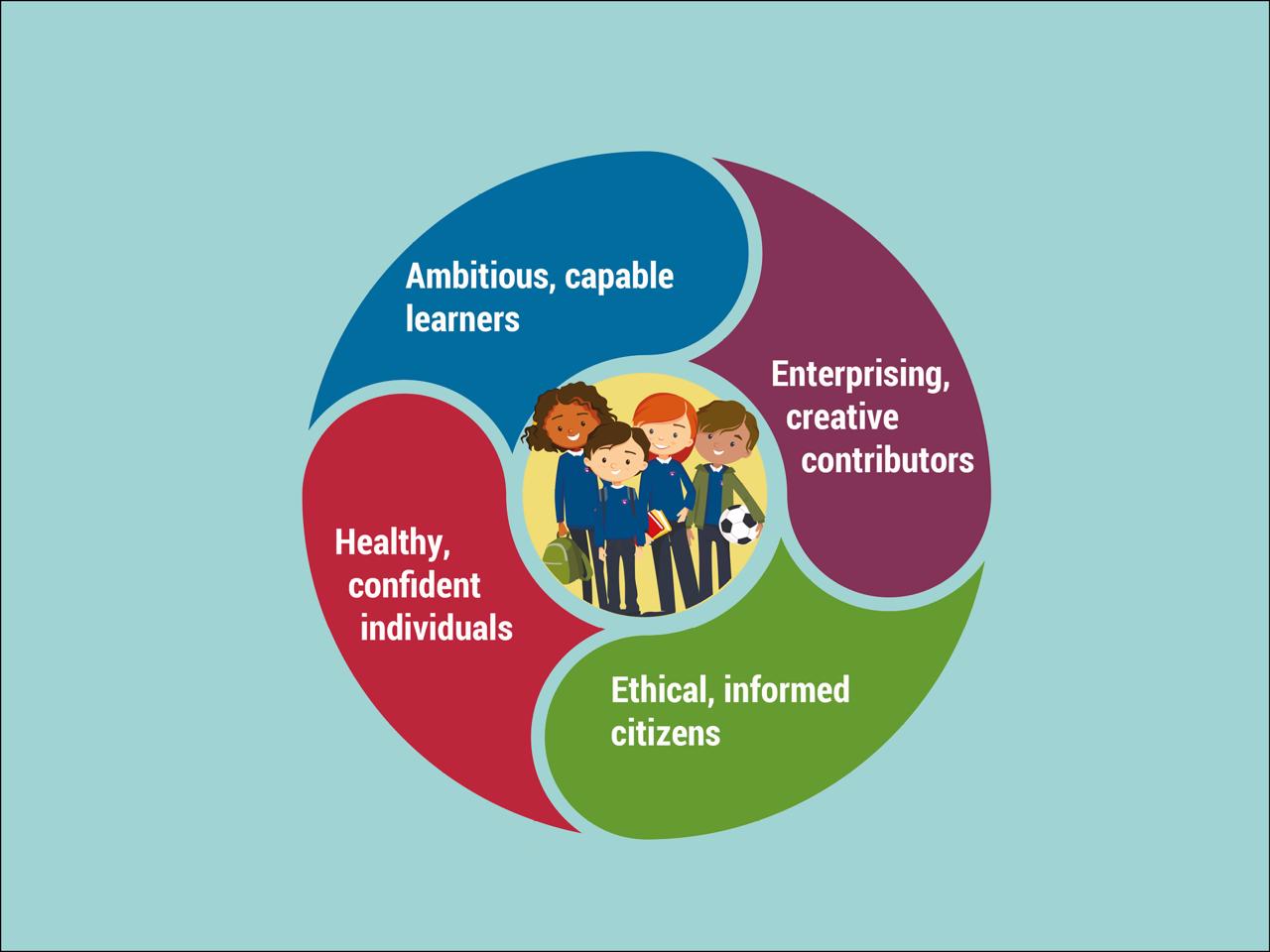
The Four Purposes, image courtesy of HWB
How White Rose Maths Supports Learning
We use White Rose Maths to structure progression from Nursery right through to Year 6. It breaks learning into small, manageable steps so children can build on their understanding before moving on to other mathematical concepts.
As parents, you may have seen on your child's class SeeSaw that our learners use a wide range of resources such as blocks, counters, Numicon and drawings. That comes from White Rose Maths, and is something called the CPA Approach - Concrete, Pictorial, Abstract.
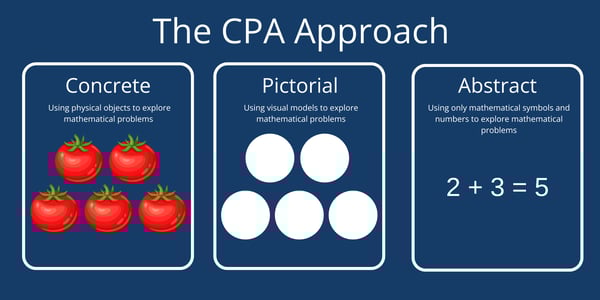
The CPA Approach, image courtesy of Sumdog
The CPA Approach (What your child experiences in class):
Concrete - Learners use real objects like counters, cubes, Numicon, or place-value blocks. This helps them feel and see what maths actually means.
Pictorial - Then they move to drawings and diagrams such as number lines, ten frames, or bar models. This helps them visualise and explain their thinking.
Abstract - Finally, they work with numbers and symbols (e.g. 45 x 2). By this point, they understand what the calculations represent..
This gentle progression helps every child succeed, even if they find maths tricky or lose confidence easily.
How this approach fits Curriculum for Wales
Curriculum for Wales encourages learners to be curious, active, and independent learners. White Rose Maths fits beautifully with these principles because it:
- builds understanding step by step
- allows pupils to talk about their ideas
- encourages problem-solving rather than memorising
- promotes collaboration and shared reasoning
- supports learenrs of all abilities through hands-on exploration
Across the school, you will see children discussing problems, explaining their thinking, comparing strategies, and supporting each other's ideas - all crucial skills across the Curriculum for Wales.
The Five Mathematical Proficiencies (5Ps)
The Curriculum for Wales describes five key skills that help learners become strong mathematicians. Here is how they look at Abercerdin Primary School:
1. Conceptual Understanding
Learners understand the maths they are doing, rather than just copying methods.
The CPA approach helps them build big ideas from the ground up.
2. Procedural Fluency
Learners practice until they can use methods accurately and efficiently.
White Rose's small-step structure supports the development of this fluency.
3. Strategic Competence
Learners learn how to choose the best strategy to solve a problem. Bar models and visual tools really help with this.
4. Logical Reasoning
Learners can explain why something works and can justify their thinking.
You will often hear pupils saying, "I know this because..."
5. Communication using Symbols
Learners develop confidence in understand the language of maths using mathematical symbols.





The Five Mathematical Proficiencies, images courtesy of HWB
What this looks like in Abercerdin Day-to-Day
- Lessons start with talk, investigation, and hands-on exploration
- Learners work with partners to discuss strategies
- Teachers ask rich, open questions to get children thinking deeply
- Difficult concepts are revisited little and often
- Everyone, regardless of starting point, is encouraged to aim high
- Mistakes are seen as part of learning
- Learners use concrete materials right up to Year 6 when needed
We want maths to feel accessible, enjoyable, and meaningful - whether children are counting in Reception or tackling fractions in Year 6. Our message is simple: everyone can do maths with the right support.
How parents can support at home
It is not essential to use the exact same methods of teaching maths that we use in school at home. Instead, try:
- Asking your child to explain how they solved something
- Practising times tables in small, manageable bursts
- Spotting maths in daily life (shopping, cooking, telling time)
- Encouraging your child to be resilient - instilling that "have a go" attitude even when they are unsure
Confidence is often more important than correctness.
In summary
At Abercerdin Primary School, our use of White Rose Maths alongside the Curriculum for Wales helps us create:
- Confident problem-solvers
- Creative thinkers
- Children who enjoy maths and understand how it connects to their world
Our approach ensures every pupil receives the support they need to thrive, while also being challenged to push their thinking further.